
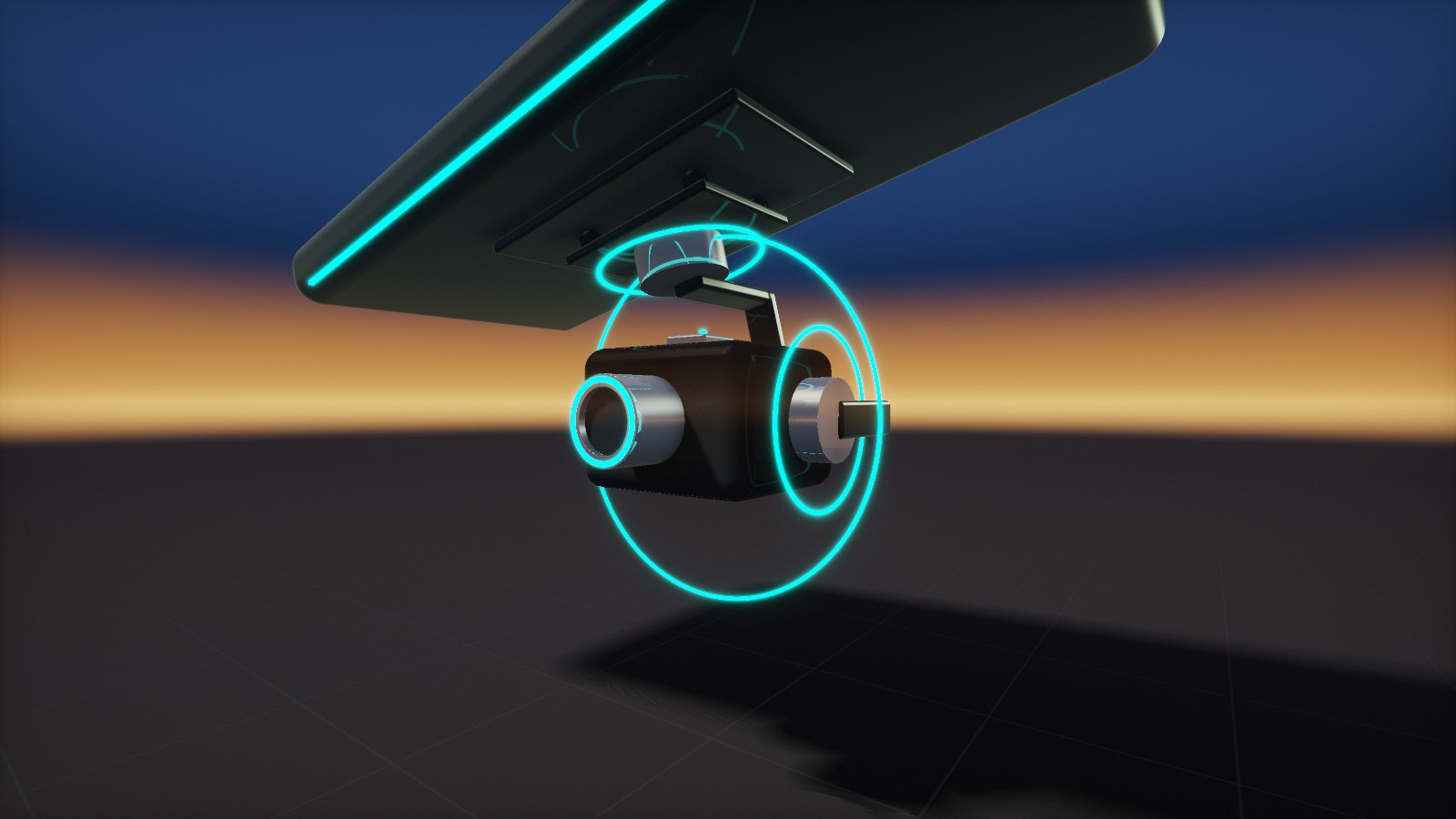
Keep the payload on target while the platform moves
Cameras, EO/IR sensors and antennas on drones, vessels and vehicles are constantly disturbed by vibration, wind, waves and manoeuvres. A stabilization controller measures these movements with an IMU and counteracts them with its motors in real time.
AMCORIS supplies Epson 6-axis IMUs and supports you from sensor selection and evaluation to integration into your stabilization system.
QUICK ANSWER
Which IMU specs matter for stabilization?
Angular random walk (gyro noise) decides how smooth the stabilized image or beam is. Bias instability decides how well a pointing angle is held over time without drift. Output rate and latency limit the bandwidth of the control loop, and size and weight matter on small gimbals. The Epson M-G366PDG and M-G370PDG combine 0.08 and 0.06 °/√h ARW with up to 2 kSps in a 10 g package.


THE STABILIZATION LOOP
How an IMU keeps the payload steady
The IMU sits on the stabilized part of the gimbal or platform and measures every remaining movement. The controller uses this data to drive the motors so that the payload stays level and on target.
1
Sense
Angular rate and acceleration on three axes, at up to 2000 samples per second.
2
Estimate
Attitude from gyro and accelerometer fusion, with gravity as the level reference.
3
Correct
Motor commands counteract the disturbance before it reaches the payload.
4
Hold
Low bias instability keeps the pointing angle stable over minutes and hours.
Gyro bias instability in °/h (typ.). Shorter is better.
M-G330PDG
M-G366PDG / M-G552PR1
M-G370PDG / M-G552PR7
M-G570PR
Sources: Epson data sheets M-G330PDG0, M-G366PDG0, M-G370PDG0, M-G570PR20 and M-G552 series specifications.

IMU SELECTION
Which Epson IMU for which stabilization task
All IMUs combine three gyroscopes and three accelerometers with a digital interface and factory calibration over temperature. Values are typical gyro bias instability and angular random walk.
TOP PICK FOR GIMBALS
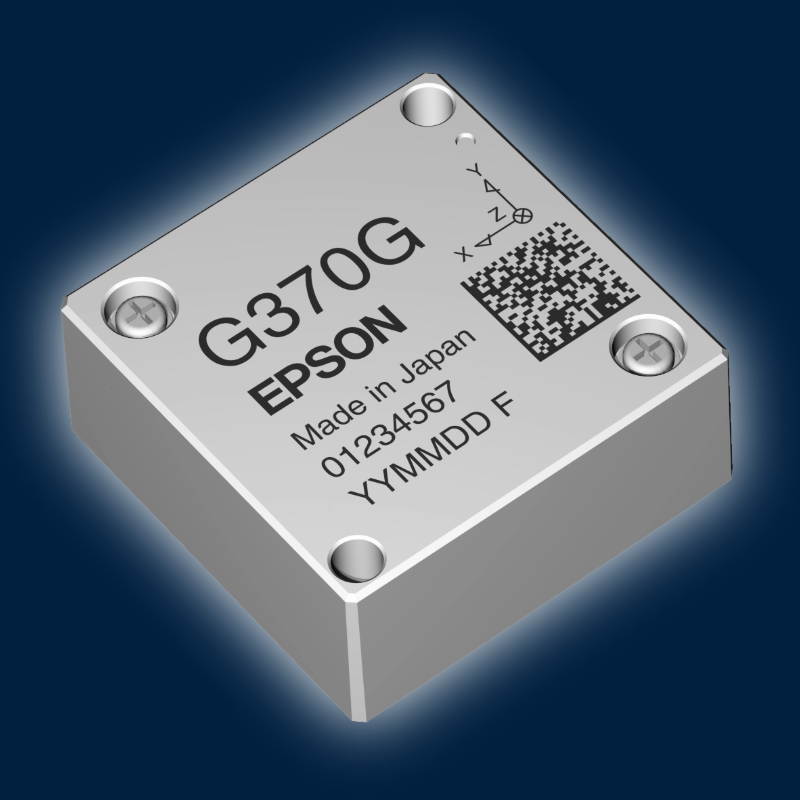
M-G370PDGOn request
UART/SPI · 0.8 °/h · 0.06 °/√h · 10 g
EO/IR payloads and precision gimbals that need low noise and low drift.
Product details →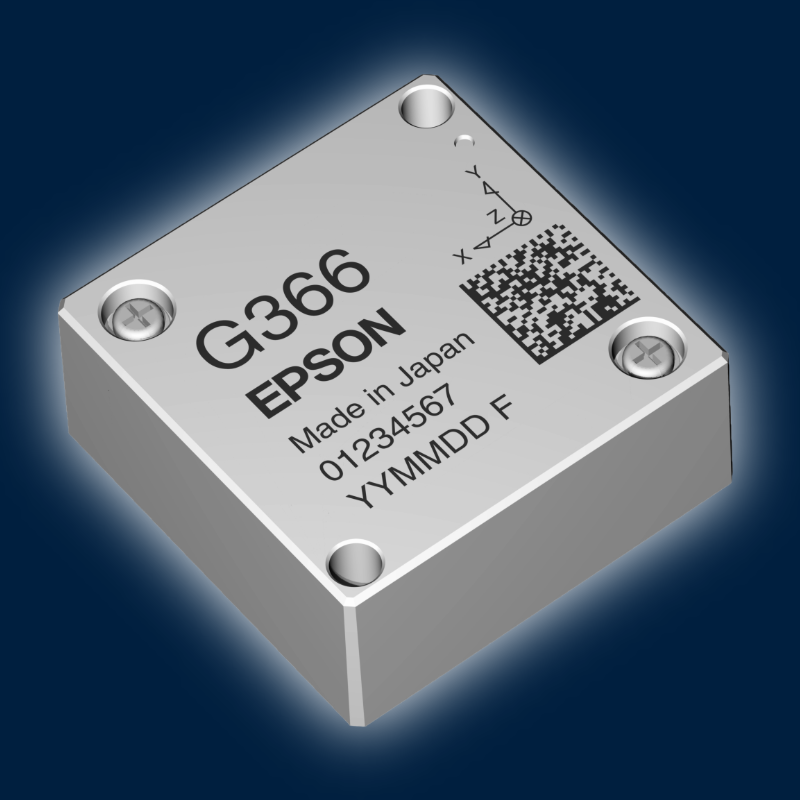
M-G366PDGOn request
UART/SPI · 1.2 °/h · 0.08 °/√h · 10 g
Small camera gimbals and UAV payloads where size, weight and power are critical.
Product details →FOR HIGH-END GIMBALS
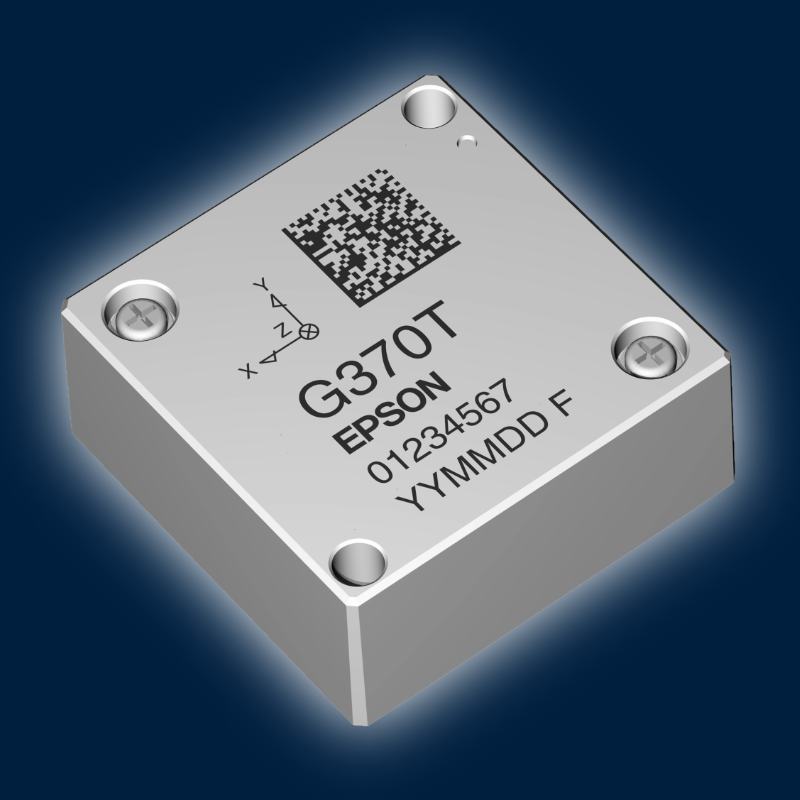
M-G370PDTOn request
UART/SPI · 0.8 °/h · 0.03 °/√h
High-end gimbals and EO/IR payloads where the lowest angle noise counts.
Product details →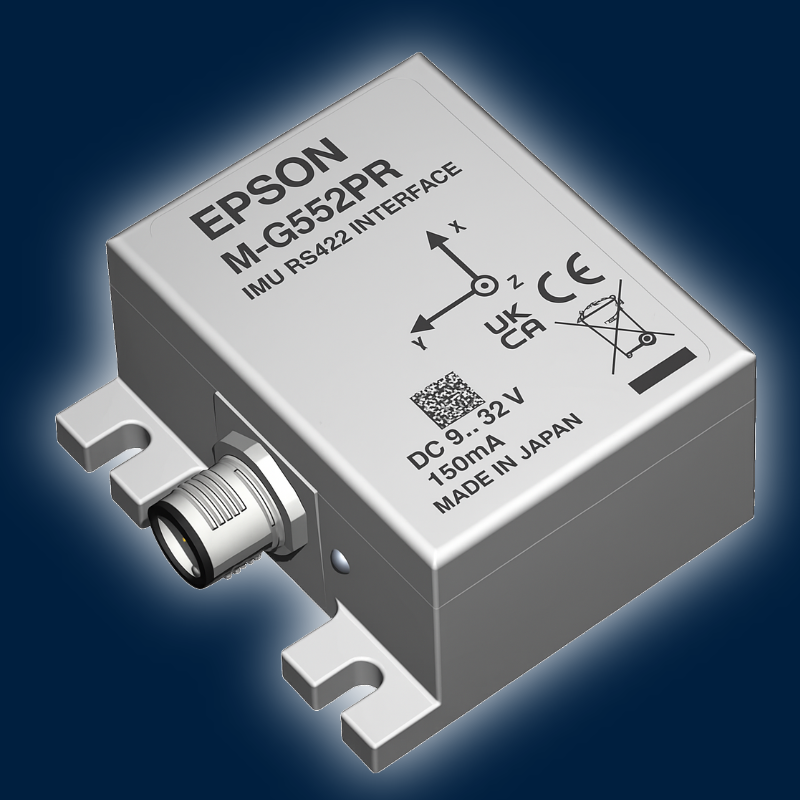
M-G552PR7On request
RS-422 · 0.8 °/h · 0.06 °/√h · IP67
Antennas and sensor masts outdoors and on vessels, long cable runs.
Product details →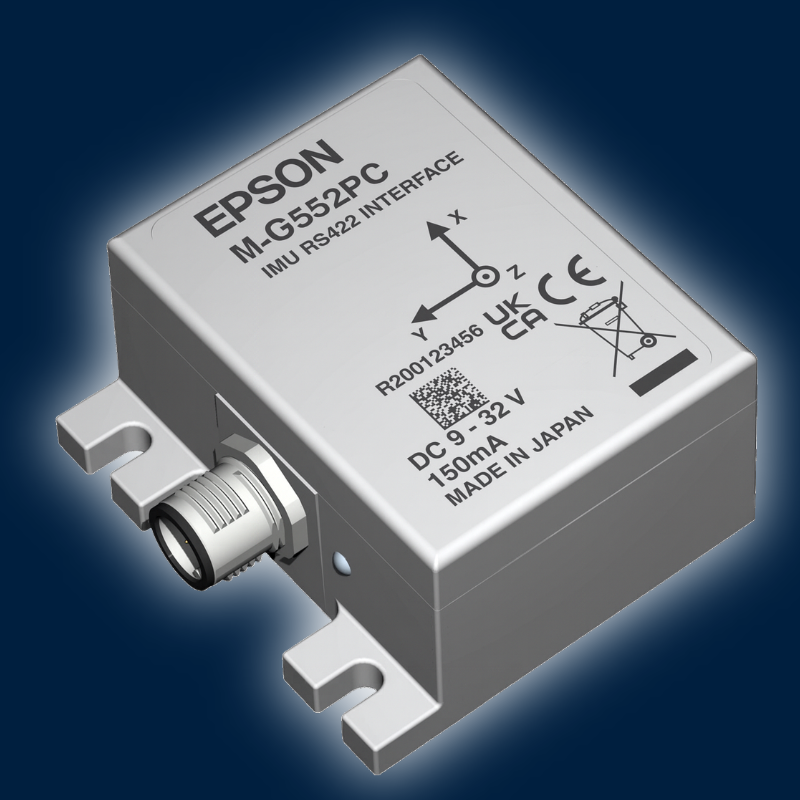
M-G552PC7On request
CANopen · 0.8 °/h · 0.06 °/√h · IP67
Platforms with several nodes on one CAN bus, e.g. vehicles and machinery.
Product details →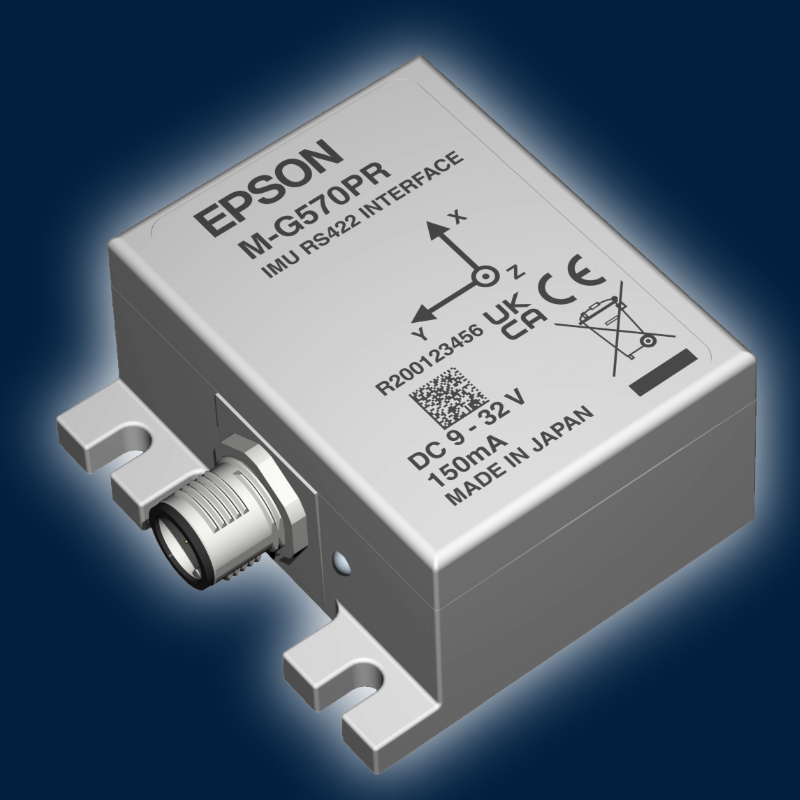
M-G570PROn request
RS-422 · 0.5 °/h · 0.04 °/√h · IP67
Highest pointing accuracy for optical and geophysical sensor platforms.
Product details →FROM AMCORIS PROJECTS
Integration examples
Epson IMUs integrated into a UAV EO/IR gimbal and a marine antenna stabilization system, where precise angular rate data keeps the payload aligned under continuous motion.
-

Challenge
UAV EO/IR Gimbal Stabilization
Maintaining stable camera alignment during aggressive flight manoeuvres, wind gusts and rapid platform movements.
-
Solution
UAV EO/IR Gimbal Stabilization
An Epson high-performance MEMS IMU was integrated into the gimbal control system, providing precise angular rate and orientation data for real-time stabilization.
-
Result
UAV EO/IR Gimbal Stabilization
The result was highly stable image acquisition, improved target tracking accuracy and reliable platform stabilization even under dynamic flight conditions.
M-G366PDG
-

Challenge
Marine Antenna Stabilization
Keeping communication and surveillance antennas accurately aligned despite continuous vessel movement caused by waves and changing sea conditions.
-
Solution
Marine Antenna Stabilization
An Epson IMU was integrated into the stabilization controller, enabling continuous roll, pitch and yaw compensation with low drift and high environmental stability.
-
Result
Marine Antenna Stabilization
The result was reliable antenna alignment, improved communication stability and accurate platform compensation during continuous vessel motion.
M-G552PC7

WHY AMCORIS
Why engineers choose AMCORIS
01
Stabilization expertise
Experience with gimbals, payloads and antenna platforms.
02
Low-noise gyroscopes
PDG series from 0.06 °/√h ARW, M-G370PDT down to 0.03 °/√h for high-end gimbals.
03
Application engineering
IMU selection, evaluation kits and integration support.
04
Built for harsh conditions
IP67 variants for outdoor, marine and vehicle use.
QWhat is the difference between bias instability and angular random walk?
Angular random walk describes the short-term noise of the gyro and affects how smooth the stabilization is. Bias instability describes slow drift of the gyro offset and affects how well an angle is held over time.
QDo I need a full IMU or is a gyroscope enough?
The gyroscopes do most of the stabilization work. The accelerometers provide gravity as a reference, so roll and pitch drift can be corrected and the payload stays truly level.
QWhich interface for antennas and outdoor platforms?
For long cables and electrically noisy environments, RS-422 or CANopen with an IP67 housing is the robust choice, for example the M-G552 series or the M-G570PR. Compact gimbals usually use the UART/SPI models; the M-G370PDT offers the lowest angle noise in the compact package.
QCan I test the IMUs before ordering?
Yes. Request an Epson evaluation kit from AMCORIS and test the IMU in your own setup. Our team helps you choose the right model.
More IMU's


EVALUATION KIT
Test it in your own system
Epson evaluation kits are available from AMCORIS as a free loan for qualified projects. Share a few details about your application and we prepare the right kit and support you during the evaluation.
✓Free loan for qualified projects
✓Help with model selection and set-up
✓Direct line to our application engineers


